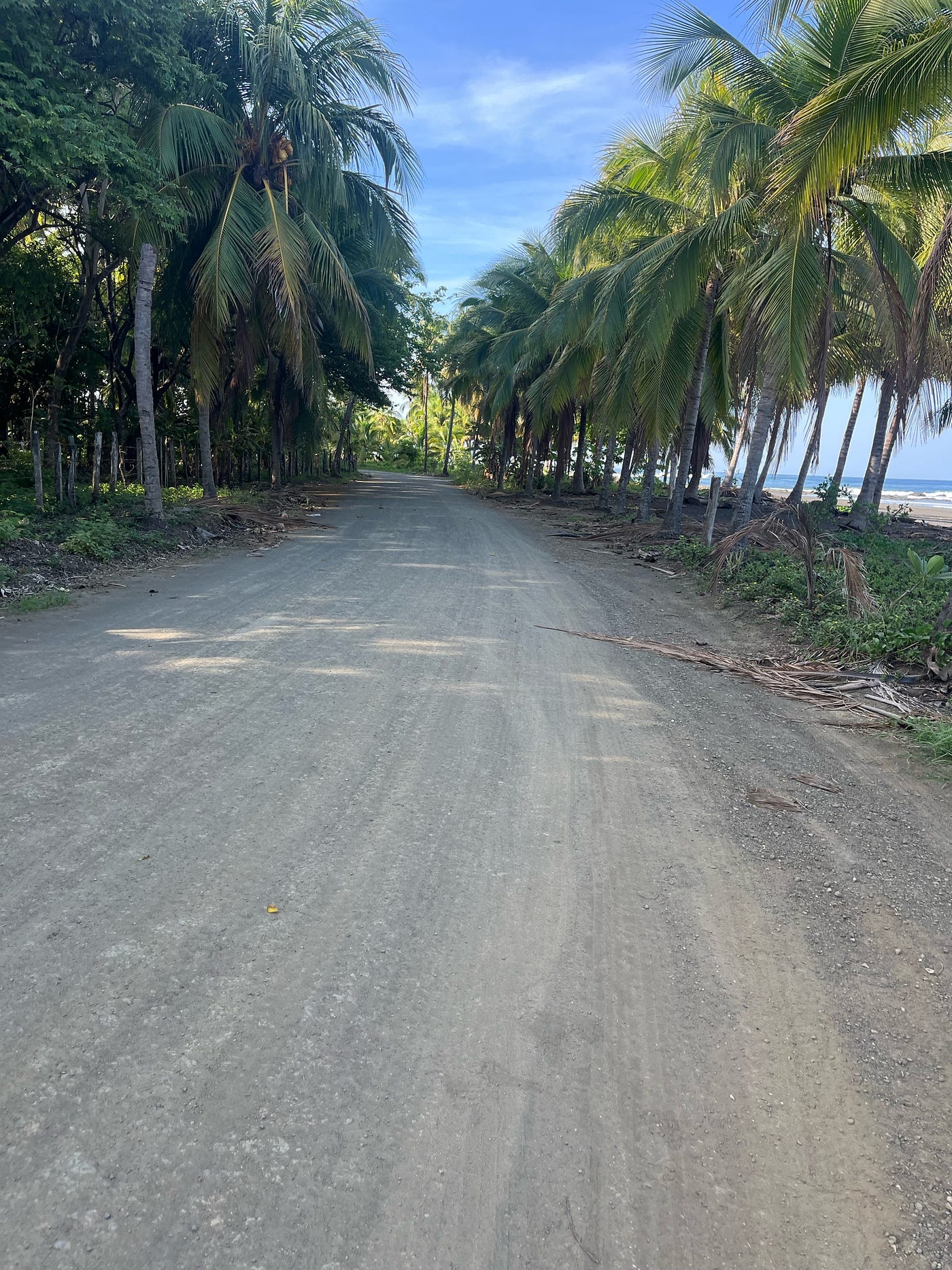
The other morning, while on my regular jogging route, the Marbella beach loop I call it on Strava, I noticed someone chopped away a large portion of the jungle. One day the trees are there and the next week they are not. Hundreds of trees must have been cut down. I tried counting but that is impossible.
One larger tree in particular was chopped and had fallen over, but a thin portion of bark was still just connected to the stump, so I could clearly see where the cut tree used to stand. The bottom portion of the tree was facing the road, so I could view the many rings within the tree. This is rare to witness. Impossible to count. If each ring is a year, as I always assumed, then this tree must have survived decades and perhaps millennia, before coming in contact with the hungry teeth of an underpaid day laborers chain saw.
The impersonal nature of mass destruction is like a quake in the soul. In some cultures or planets this might be considered genocide. We are perhaps quick to pull the word genocide out of our lexicon now days, like ninja throwing stars. Surveying the fallen trees on the side of this country road a subtle trembling reverberates in me, like safely witnessing a land recently fire bombed; like a Dresden in the morning. Like homocide on a movie screen. There is disconnection yet feeling. Another genocide debated at dinner parties and on Instagram reels. Genocide like a check mate. Yet within the savage nuance of our age are actual downed trees and organic things which have been literally severed from the realm of living. This thing is no more. The bleak finality in action. The actuality of a fallen tree is perhaps undebatable. Perhaps.
The entirety of such action is easy to drive by and shrug off, while accelerating towards the beach or returning home from a surf. Easy to converse over, while deciding where to eat, or how the ocean conditions were in the morning. Easy to rationalize and calculate — the current of money is strong and we are all sept up in it. I do it all the time here. One day a tree and the next day a job. Although, walking by this timber cemetery on this particular humid morning, I was forced to stop and consider the absolute ease of genocide when you have the correct weapons and a budget. In this case an old pick up truck full of tools and men. A backhoe soon to follow. In the warm tropical morning I am standing there watching the decimated wood lay and tremble. Removed from their roots. Separated from their community.

If you stand there long enough you can hear their whispered conversations. Ancient conversations. Conversations about water and movement; about clouds and heat; about light footed deer and hard shelled bugs. You can hear the trees call each other names and joke about the shade of their bark, or the curve of their branches. You can hear love poems between Guanacaste heavies in early twilight before the moon’s orchestra ascends to the stage. You can hear light gossip between skinny Molina trees crowded around a patch of barren space. Just kicking it. You can hear the woes and hopes of a forest certain in its posture and purpose. You can listen to the wisdom passed down to saplings. You can hear the prayers for fallen branches laying still upon the earth, ready to be feasted upon. And you can hear the excited scramble of earths cleaning crew rushing down the hills and up the muddy embankments to eat and eat and eat.
Standing there, so small, a bystander, a criminal, helplessly watching the freshly cut open space, I tell myself, with clear pronunciation, without nostalgia or regret, with a swelling of grief but inevitably tempered by the sad fortifications of experience, that “this is what we have arrived at. This is exactly who we are.”
The trees lay wounded across a jungle wasteland — a few acres, hectares, whatever the vocabulary of sale is now. Whatever the exchange rate demands. This work of destruction is perhaps making way for organic grocery stores and well lit pharmacies. Building retail space for colorful bikini displays and name brand surfboard short sales. A new home for luxury surfboard shops selling the freshest epoxy Firewire designs and Tomo classics. Playing soft reggae music over outdoor speakers, onto a cozy courtyard with metal picnic tables. Wood stained plaques with attractive names for each building, like Pipeline, and Teaupoo, and Jaws. Freshly poured concrete walkways network between the shops and up the hill to recently minted residential buildings. A pretty sandwich board sign advertises smoothies with spirulina. What is so complicated is that I love spirulina.
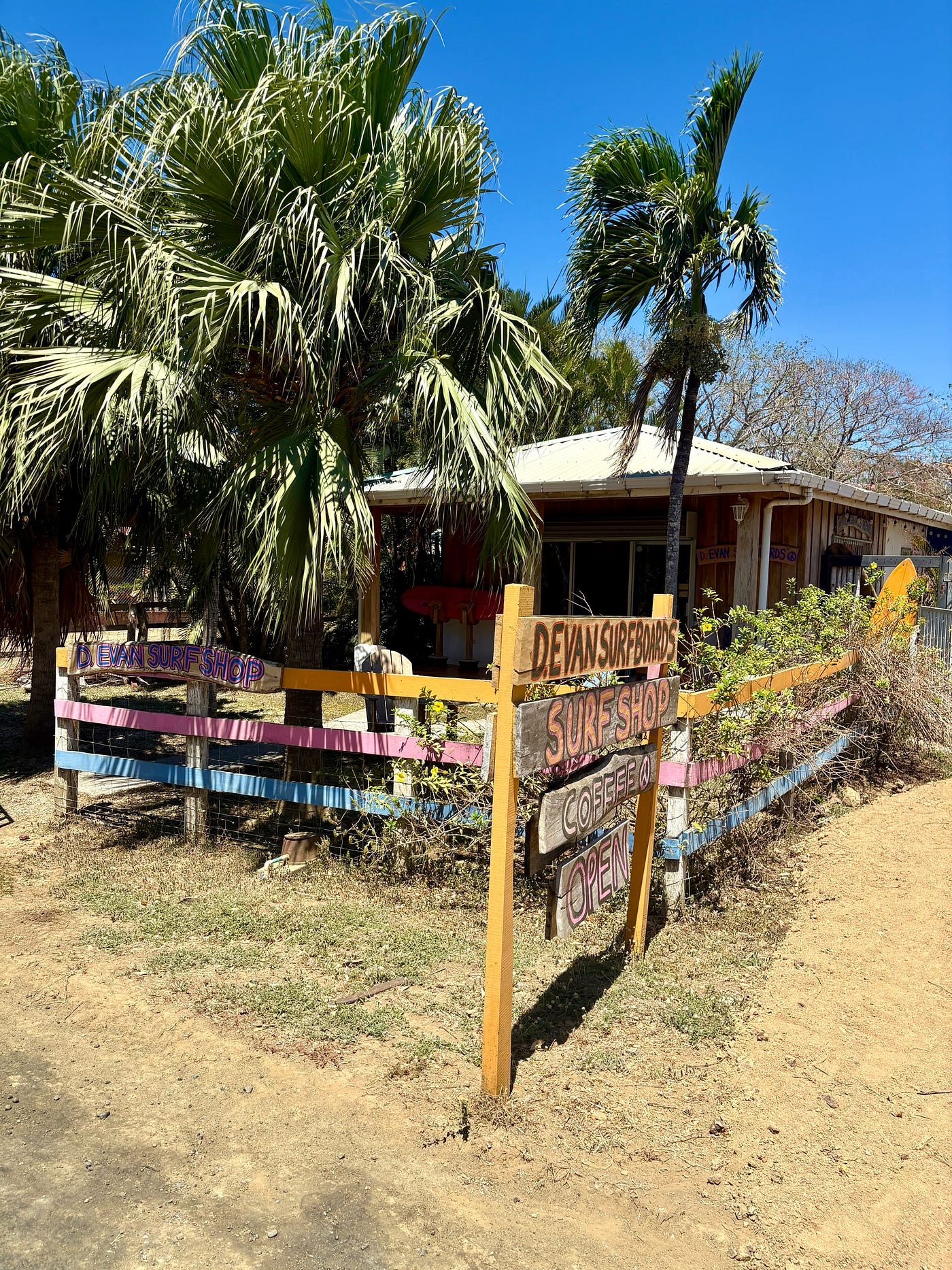
My running shoes are glued to a single spot. It is not pleasant to witness the cold hard corpse of destruction. Just standing there like an idiot looking at fallen trees. Knowing that soon my feet will move again and my slow pace will continue, back to my shop up the road, back to my own little piece of the problem, back to my own little recluse of gentrification and wonder. And with my inevitable movement this momentary recognition of murder is stored in a deep yet silent cabinet of grievances and daily heartbreaks; tear soaked files pushed down and cramped, always new information coming in, always the ticking clocks and hungry screens.
They are cutting down the trees but I am not sure who they are, or even if it matters anymore. Marbella as a tropical bardo to the powers of development and the sticky spill of progress. Arguments on WhatsApp groups and digitized local newspapers mildly protest. Snide comment in Facebook posts: looking for a job, please advice; you don’t belong here; you are fucking it up; my family wants to move to Costa Rica and wondering how the vibe is; you don’t live here so don’t surf here; we lived there until 2019 but moved back home and so happy that we did. Costa Rica used to be paradise but sold out. The dialogue is often vitriol without compromise. Perhaps the compassion on all sides has been lost. Meanwhile the trees are now dead.
They cut down the giant trees in front of Rinde Mas. In front of the beach. In this section, or that canton, or another nameless pueblo. The blues roll in with the tides and out goes the cash and the services. Out go the petty tree stumps and newly plowed fields. Standing in the middle of the road on a slow morning, now, considering the weight of destruction and the inevitable crunch of change, I no longer want to come back here. Yet soon I will just pass this tomb everyday. Like it is nothing. Like it all so normal. Like premature death is normal. If you offer enough money everything is for sale. The cracks in the dam are gradual. Then one day out comes the guillotine and everyone wonders how it got to this. Blood soaked bad roads. Investors hanging from mango trees.
Not saying it is going to go this direction. But those trees must be so furious.


